Before & After
The difference one visit makes.

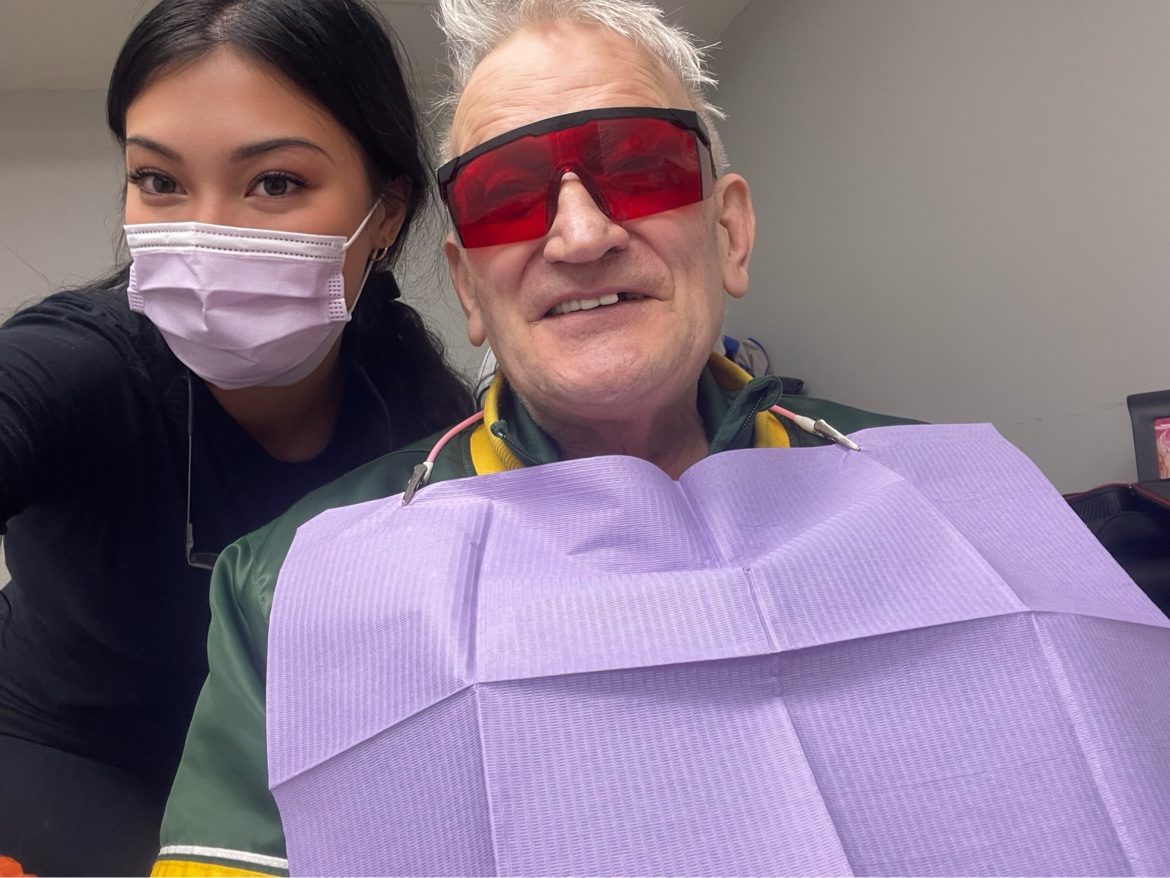
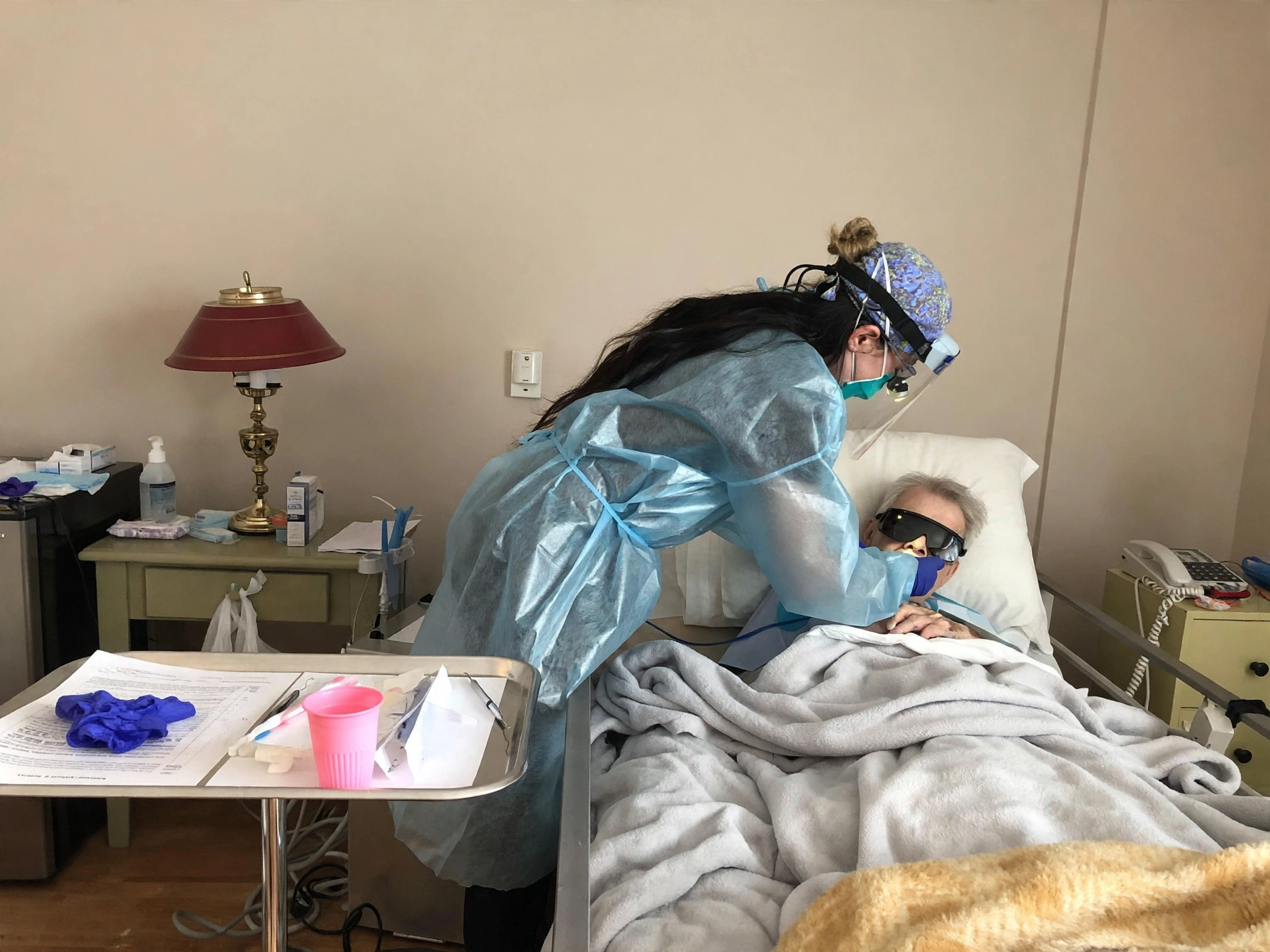
Professional dental care in the comfort of your home. We come to you.
Every visit is unhurried, gentle, and tailored to the person in the chair — with professional portable equipment and strict infection control.
A thorough scaling and polish that removes plaque, tartar, and stain — the foundation of lasting oral health.
A complete assessment of your gums, teeth, and soft tissues, including a dental hygiene diagnosis, with clear findings explained in plain language.
Personalized guidance for you or your caregiver — practical techniques that fit your abilities and routine.
Professional whitening, complimentary when clinically appropriate — ask whether it's right for you.
A complete checkup and cleaning, right in your own home. We examine your teeth and gums, take x-rays when they are needed, and clean your teeth thoroughly. Everything is explained in plain language.
Professional whitening is also available. We will assess whether whitening is appropriate for you at your visit, based on your overall health and any underlying conditions.
If getting to a dental clinic is difficult, we come to you — with patience, respect, and care that fits your life.
Gentle, unhurried care in the comfort of home.
Patient, familiar care that meets them where they are.
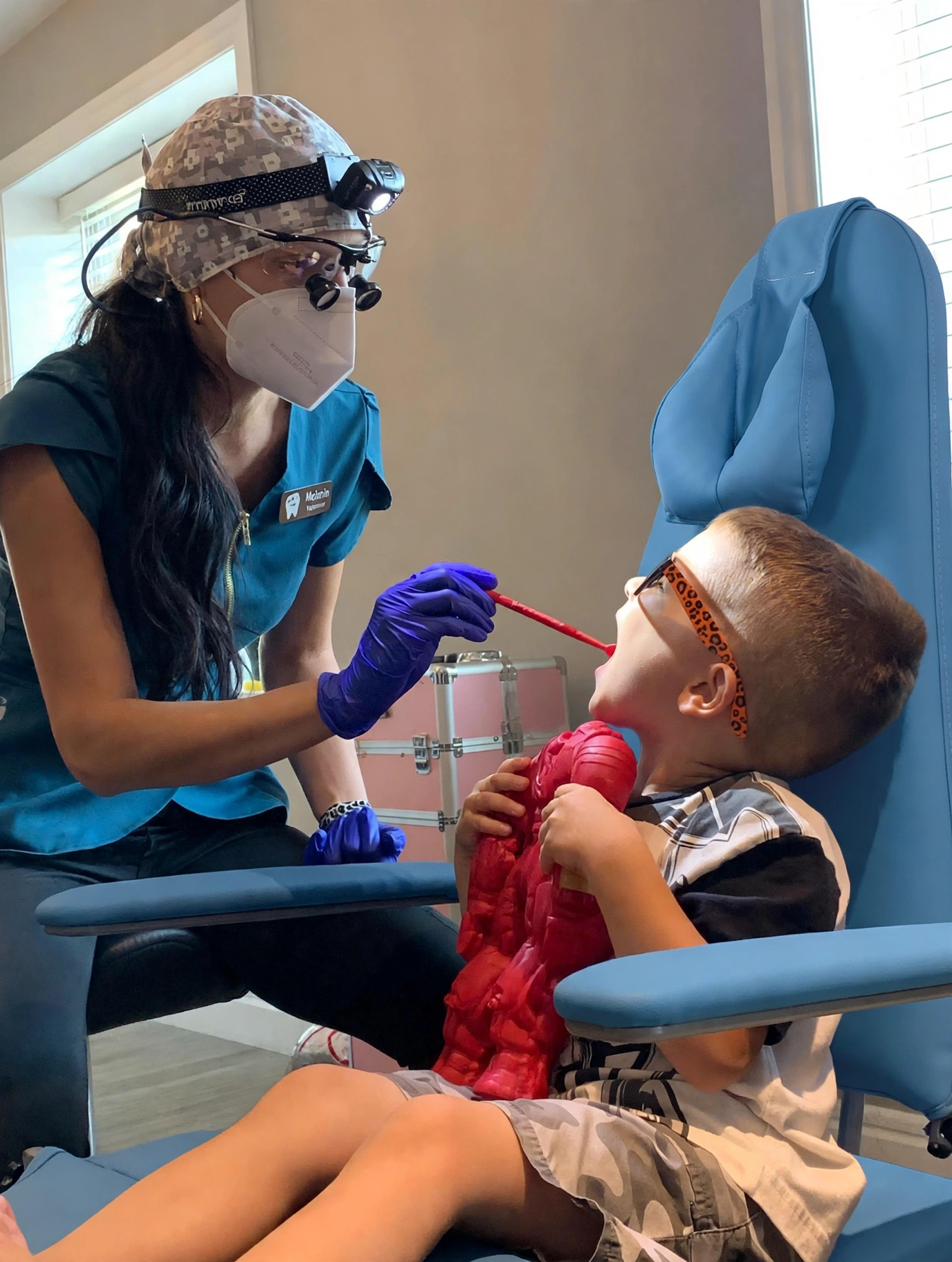
Care for physical and mental complexities of many kinds, including visual complexities and common complexities such as autism, Down syndrome, and ADHD. Behavioral supports are supplied at every visit, calm and at their own pace.
Respectful care for the whole family, at home.
A warm welcome as you settle in.
We come to you — at home or in your facility.
Everyone seen in one visit, no cross-city shuttling.
No stairs, no waiting rooms, no barriers.
Proudly serving families and staff of Edmonton Public, Edmonton Catholic, and private schools — including on-site staff booking days at your school.
We speak your language. Tell us what you need when you book — just let us know in advance, and we’ll arrange interpretation for your visit.
Transparent, affordable pricing — contact us for our current fee schedule.
Transparent pricing, confirmed before your appointment. You'll always know the cost before we begin.
Anywhere we serve across Alberta, coming to your door costs you nothing extra. Ever.
Exact fees depend on your individual treatment plan and are confirmed in advance.
Every Dental At Home appointment includes personalized oral health education tailored to you. A cleaning should leave you with more than a refreshed smile — it should leave you understanding your own oral health and confident maintaining it between visits.
We welcome patients covered under the Canadian Dental Care Plan (CDCP).
Every annual cleaning includes complimentary whitening, provided it is appropriate for you. When whitening is contraindicated for reasons of oral or overall health, your well-being always takes precedence. All care is delivered in accordance with the Alberta College of Dental Hygienists (ACDH) standards of practice.
We work with your dentist. With your consent, we stay in touch with your dental office — sharing what we see, what we do, and what we recommend — so everyone caring for your smile is on the same page. If you do not have a dentist, we can help you find one who fits your specific needs.
What is new at Dental At Home — where we are serving, who we are caring for, and when we are booking.
Dental At Home is now pre-booking home visits into January 2027. We care for seniors, veterans, and families in their own homes across Alberta. Our fees are below the Alberta fee guide, every cost is confirmed before your visit begins, and every annual cleaning includes complimentary whitening, provided it is appropriate for you. Call or text to reserve your visit.
Dental At Home now offers Community Days — scheduled care days for workplaces, seniors' residences, and community organizations across Alberta, at no cost to the host organization. All we need is a small room with a plug-in, and care can also be provided right at the bedside or in a person's own chair. To arrange a Community Day for your team or your residents, call or text us.
This Remembrance week, we congratulate Veterans' House Canada on the opening of the Edmonton Home, where forty veterans who have experienced homelessness now have a permanent place to call home. Dental At Home is honoured to care for veterans in their own homes, and we thank every veteran and military family for their service.
Short, practical oral health education — the same guidance we share in your home, written down so you can revisit it anytime. Tap any post to read it in full.
One-sided weakness, fatigue, and swallowing changes can push mouth care aside after a stroke — adapted tools and small, steady routines bring it back.
Tap to read moreAfter a stroke, recovery asks a great deal, and mouth care is easily pushed aside. It deserves a place in the plan. Weakness on one side, reduced feeling in the mouth, and fatigue can all make brushing difficult, and many strokes affect swallowing. The Heart and Stroke Foundation of Canada explains that difficulty swallowing — dysphagia — can let food or liquid enter the airway, which can lead to pneumonia. A clean mouth carries fewer bacteria, which matters more, not less, when swallowing is unreliable.
Adapt the routine to the body you have now. Brush seated, at a time of day when you are least tired, and let an electric toothbrush do the work your hand cannot — a built-up grip or a handle that slips over the hand helps when grasping is weak. Chew and brush on the stronger side, and check the weaker cheek afterward: food often pockets there without being felt. Clean between the teeth with holders rather than string, and if you wear dentures, take them out at night, clean them daily, and let your gums rest.
Follow the swallowing plan set by your speech-language pathologist and care team, and tell your dental hygienist about any swallowing difficulty, your medications, and what your rehabilitation team recommends — that shapes how care is paced and positioned. A family member or caregiver can help with the spots that are hard to reach, and regular dental hygiene care at home fits into recovery without travel or transfers. Small, steady routines protect your teeth, your eating, and your lungs while you rebuild.
When the dental office itself is the barrier, care can come to you — accessible oral care at home, adapted tools, and a pace that respects the person.
Tap to read moreEveryone deserves a healthy, comfortable mouth. For people with physical and developmental disabilities, the barrier is rarely the person — it is the setting: travel, transfers, unfamiliar rooms, bright lights, and rushed appointments. The Canadian Dental Hygienists Association counts people with disabilities among the groups in Canada with significant unmet oral health needs, which means too many people simply go without preventive care until something hurts. It does not have to work that way.
Care at home changes the equation. In familiar surroundings, a person can be seen in their own chair, wheelchair, or bed, with a support person nearby and time for breaks. Tools adapt to the person rather than the other way around: an electric toothbrush cleans well with less technique, a built-up handle is easier to hold, a smaller brush head reaches more comfortably, and floss holders or a water flosser can replace string floss. The plan is built around each person's abilities, supporting independence first and helping only where help is wanted.
Caregivers and support workers are partners in this. A dental hygienist can demonstrate positioning and technique, suggest adaptations as needs change, and help you spot the quiet signs of dental pain — eating less, favouring one side, holding the face, or a sudden change in behaviour. Regular preventive visits at home keep small issues small, protect eating and comfort, and spare everyone the crisis appointment. Good oral care should fit the person's life, not demand that their life fit an office.
Recovery is a time of rebuilding, and your mouth is part of it — how to restart oral care gently, at your own pace, with support that never judges.
Tap to read moreRecovery means rebuilding — health, routines, stability, confidence. Oral care is often one of the things that fell away during active addiction, and returning to it can feel daunting: there may be pain, damage, or embarrassment to face, and a real worry about being judged or lectured. That worry alone keeps many people out of care. It should not. The Centre for Addiction and Mental Health is clear that stigma — the prejudice and discrimination aimed at people with substance use problems — stops people from getting health care they need, and that everyone deserves treatment with dignity and respect.
Your mouth may be carrying real effects. Substances dry the mouth, and so do many medications that support recovery; with less saliva, decay and gum inflammation build faster, and teeth can become sensitive. The way back is small steps, at your pace. Restart with the basics: brush twice a day with fluoride toothpaste, sip water often, and use sugar-free gum to get saliva moving. Nothing has to be perfect to be worth starting, and a partial routine done kindly beats a perfect one postponed.
Professional care in recovery should focus on comfort and prevention first, in stages you choose. You do not need to explain yourself or apologize for the state of your teeth to deserve care. A dental hygienist can build a plan with you that starts wherever you are — easing sensitivity, calming gums, then rebuilding from there — and care in your own home removes the waiting room from the experience entirely. A healthy, comfortable smile is part of the life you are building, and you do not have to build it alone.
Diabetes raises the risk of gum disease, and inflamed gums can make blood sugar harder to manage — why oral care belongs in your diabetes routine.
Tap to read moreDiabetes and gum disease influence each other in both directions. Diabetes Canada's clinical practice guidelines describe gingivitis and periodontitis as two of the most serious dental conditions for people with type 1 and type 2 diabetes. When blood sugar runs high, the mouth faces more decay, more dry mouth, and a slower, weaker response to infection — so gum inflammation takes hold more easily and heals more slowly. In the other direction, the ongoing inflammation of gum disease can contribute to insulin resistance, which can make blood sugar harder to control.
Know the signs worth reporting: gums that are red, swollen, or tender, bleeding when you brush, persistent bad breath, or a tooth that feels different when you bite. Dry mouth deserves attention too, since less saliva means less natural protection for your teeth. Tell your dentist and dental hygienist that you have diabetes, and share your medications and, if you know it, your recent A1C — that information helps your oral care team pace treatment and watch the right things.
Treat daily mouth care as part of diabetes self-management, not an extra. Brush twice a day with fluoride toothpaste, clean between your teeth daily, and keep regular professional dental hygiene appointments so inflammation is caught early and kept down. Keeping your gums healthy is one more way to support steadier blood sugar. And if cost has kept you from care, we welcome patients covered under the Canadian Dental Care Plan (CDCP).
From childhood through adulthood, spina bifida calls for dental care that plans around latex sensitivity, mobility, and positioning — here is what helps.
Tap to read moreSpina bifida accompanies a person from birth through adulthood, and oral health needs change across that whole lifespan. Childhood often brings frequent medical appointments and surgeries, and dental care can quietly slide down the list. Mobility aids, wheelchair use, and — depending on the level of the spinal lesion — differences in hand and arm function can all shape how daily brushing gets done and how a dental visit needs to be set up. Regular preventive care matters precisely because life is already full of appointments: small problems found early stay small.
One planning point is specific to spina bifida. The Spina Bifida Association notes that people with spina bifida are at high risk for latex allergy, from repeated exposure to latex products during surgeries and catheter care from early in life. Tell every dental provider about a latex sensitivity before the visit, keep it noted in your records, and ask for latex-free alternatives — nitrile or vinyl gloves and latex-free dams and bands are readily available. At home, the same awareness applies to everyday items such as pacifiers, balloons, and rubber grips on brushes.
Comfort and positioning make care work. Care can be provided with you seated in your own wheelchair, or transferred with support if you prefer, and an electric toothbrush reduces the grip and motion needed at home. For children, caregivers can build independence step by step, helping only where help is needed. Care in your own home removes travel, transfers, and unfamiliar rooms entirely. Let your dental hygienist know about shunts, mobility, and the positioning that works best for you, so each visit is built around your body and your routine.
Tremor, stiffness, and dry mouth can make daily oral care harder with Parkinson's — here are adaptations that help, for you and for anyone who assists you.
Tap to read moreParkinson's affects the mouth through the same symptoms that affect the rest of the body. Tremor, rigidity, and slower movement make holding a brush and guiding it well genuinely difficult, and Parkinson Canada estimates that about half of people with Parkinson's encounter challenges with daily oral hygiene and dental care. Many Parkinson's medications also dry the mouth, and saliva changes and swallowing difficulties raise the stakes: teeth that decay and break down make chewing less effective, which matters when swallowing is already a concern.
The right tools do much of the work. Parkinson Canada suggests an electric toothbrush and a handle-style floss holder, brushing with your stronger arm, and using the timer many electric brushes have built in. Brush at the time of day when your medication is working best and movement is easiest. For dentures, try fixing a brush to the counter with a suction cup and moving the denture back and forth across it. Sip water often for dry mouth, and raise ongoing dryness or excess saliva with your care team.
A care partner can steady a grip, guide a hand, or finish the spots that are hard to reach, and that help is worth accepting early rather than late. Keep your dental team informed about your Parkinson's and your medications so care can be paced to you — shorter, calmer visits help, and care in your own home removes travel and waiting-room fatigue altogether. Protecting your teeth protects your eating, your comfort, and your speech, and it is worth the same attention as every other part of your care plan.
A water flosser is only as good as your technique — a few small adjustments make it far more effective.
Tap to read moreA water flosser can be a wonderful addition to your routine, especially if string floss is difficult for you — for example with braces, bridges, implants, or limited hand dexterity. It does not replace brushing, but it is excellent at flushing plaque and food from between teeth and just under the gumline.
Technique matters. Lean over the sink, place the tip just inside your mouth, and aim the stream at the gumline at a slight angle, pausing briefly between each tooth. Start on the lowest pressure setting and increase gradually as you get comfortable — effective does not mean painful.
Use it once a day, ideally before brushing so fluoride toothpaste can reach the freshly cleaned spaces. Empty and rinse the reservoir after each use to keep it fresh. If you are unsure whether a water flosser suits your mouth, ask at your next visit — we will help you decide.
A cleaning removes what is there today. Education prevents what comes back tomorrow.
Tap to read moreEvery Dental At Home appointment ends with personalized oral health education — not a generic lecture, but guidance tailored to your mouth, your abilities, and your daily routine.
That might mean a brushing technique adapted for limited dexterity, a caregiver shown how to help safely, or simply understanding what your hygienist saw and what it means for you.
Professional care and home care are partners. The visit handles what only a professional can do; education makes sure the results last until the next one.
Plaque is soft and removable. Tartar is plaque that hardened — and no brush can remove it.
Tap to read morePlaque is the soft, sticky film that forms on teeth every day. With thorough brushing and flossing, you can remove it yourself — which is exactly why daily home care matters so much.
But plaque that is missed hardens into tartar (also called calculus), usually within days. Once hardened, it bonds to the tooth surface and cannot be brushed or flossed away — it needs professional scaling instruments.
Tartar also gives new plaque a rough surface to cling to, so buildup accelerates. That is why regular professional cleanings matter even for people who brush diligently: some areas are simply difficult to reach, and early tartar is much easier to remove than heavy buildup.
Whitening is complimentary with your annual cleaning — when it is appropriate for you.
Tap to read moreEvery annual Dental At Home cleaning includes complimentary whitening, as long as whitening is not contraindicated for your health. Your hygienist will assess this at your visit.
Whitening may need to wait when there are untreated cavities, gum disease, significant sensitivity, or certain health considerations — whitening over an unhealthy foundation can cause harm rather than help.
That assessment is part of the service, not an obstacle to it. When your mouth is healthy and ready, the whitening is on us.
Yes. Dental At Home is a fully mobile dental hygiene practice serving communities across Alberta. We bring professional portable equipment and strict infection control to your door — you just provide the space. We can even visit you at your workplace.
Yes. We are open 8:00 AM – 7:00 PM, 7 days a week, so after-work visits are available — at your home or your workplace, whichever suits your day.
None of that matters. Your home is your home — we come prepared, treat every household with the same respect and care, and bring everything needed for a safe, comfortable visit.
Our fees are set below the Alberta fee guide, and there is no travel cost anywhere we serve in Alberta. Exact fees depend on your individual treatment plan and are always confirmed before your appointment — you will always know the cost before we begin. Contact us for our current fee schedule.
Yes — we welcome patients covered under the Canadian Dental Care Plan (CDCP).
Absolutely. With your consent, we stay in touch with your dental office so your care stays coordinated between visits.
Every annual cleaning includes complimentary whitening, provided it is appropriate for you. Your hygienist will assess whether whitening is suitable at your visit, based on your oral and overall health.
Every appointment is unhurried and tailored to you: a complete assessment, professional cleaning, and personalized oral health education with practical guidance for you or your caregiver.
Yes — we provide detailed receipts and documentation for your insurance claims.
Genuine patient reviews.
★★★★★"Quick and easy. Great advice. As always, leaving with clean shiny teeth. :D"
— L E
★★★★★"Love love the staff.They are very professional and kind.The receptionist is amazing Hanna my dental hugienist was amazing very caring and gentle love love love them.Highly recomended"
— Dennis Dulay
★★★★★"Very professional and pleasant. Hygienist hope to get her in the future. Great staff all around always a pleasant experience"
— Bob Allen

Hi, I'm Hannah — a Registered Dental Hygienist and the founder of Dental At Home.
Dental At Home brings extensive experience providing compassionate care in Alberta Health Services senior care facilities — supporting patients with severe dementia and Alzheimer's, as well as individuals with complex physical and mental needs, including autism, Down syndrome, behavioral challenges, stroke recovery, MVA injuries, and post-jaw-surgery care. We're also proud to serve First Nations communities, providing care on reserve land. Working with many local businesses across the community, every cleaning includes full-size oral self-care products — a toothbrush, toothpaste, and more — so you never need to purchase your own.
Call, text, or email to book a visit or ask a question. We come to you — across Alberta.

Scan to visit dentalathome.ca
We visit you at home — or at your workplace.
SERVING ALBERTA · CANADA